
Artifact 1: Atlantic & St. Lawrence Rail Road Company bond coupon block 2 (the 1920s)

Economy artifact.
The 1920s, Atlantic & St. Lawrence Rail Road Company bond coupon block 2. Primary source. Curated by Bao Bao
Stock Market was marked a development economy of Canada in the 1920s when it was a Canada’s roaring twenties. As the picture shows, chaos is trying to fight and scramble with each other every moment to invest in stocks on the market full of rigours and seriously.
The picture showcased the roaring period of Canada in the 1920s. The stock market was a highlight example for that. A lot of people wanted buying stocks or running deficit money to buy crashers who helped the exchange in the stock market. Individual people have made substantial gains if they have spent appropriately. Many people thought that the stock market would help them become wealthy quickly. This resulted in jobs-leaving and rushing to invest in that market. The valuation of stocks rose, which led to the creation of a "Bull Market." Through that, the economy was improved; it has been transformed from the gap of war to the development of peacetime.
The stock market played an important role in performing the development of the Canadian economy in the 1920s. Because to reach the stock exchange market, the economy did not just stop at regular cash trading. Thereby, looking at the process of improvement and development, Canada has made a significant step forward in many fields, from agriculture to industry. In the mid-1920s, Canada was the leading exporter of wheat in the world. The Automobile industry was also the second-largest producer of cars worldwide during this time. In 1921, urbanization occurred as a cross country for the first time. Therefore, Canada was prosperous in rebuilding and advancing the economy after world war.
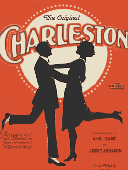
Artifact 2: 1920s Canadian dance, The Original Charleston.
Art, especially dancing, plays an integral part in people's lives because it helps people to entertain and express their feelings. In the 1920s, for Canadians, the dance prevalent and also a highlighted symbol in their music art.
As the 1920s were the Roaring period of Canada which the entertainment was one of the most things was loved and interested in. Earlier versions of the Charleston were staged in small theatre productions, but it was the popular dance hit of the Twenties that followed James P. Johnson's song "The Charleston" in the 1923 Broadway musical Runnin ' Wild. The variation of Charleston differences collapsed with the introduction of the Charleston competitions; it was for solo dancers and couples or even a group.
The Charleston was a really common dance in the 1920s adored both by the young of the "Roaring' 20s" generation. Practically the dance takes the form of kicking the legs and swinging the arms, with the arms going in the opposite direction of the legs. It was particularly humid with the "new woman" Flappers, who bobbed their hair and wearing low cut tops, partied, drinking, and detonated the past women's social standards. The Charleston was immensely popular throughout the 1920s, particularly with flappers, and it is still performed as one of swing dancing today.
Social artifact
1920s Canadian dance, The Original Charleston. Primary Source.
Curated by Bao Bao.


